#1 NYT and Amazon Best Selling author, former paramilitary operations officer, combat photographer, Captain Kidd treasure hunter, and teen Vietnam political prisoner.
Wednesday, March 14, 2012
My Dad...RIP.
Monday, June 20, 2011
Just a Little Bit of Politeness and Self-Respect: Why I always answer emails...
| Dinner with one of the nicest bestselling authors in the world: Joe Galloway. It doesn't take surviving the Ia Drang Valley to be polite these days...or, does it? |
What is it with some bestselling authors? You put down your hard-earned money. You really enjoyed their book. You took time out from your life to share with the author your joy, how the book touched you, that you were overjoyed to have a literary adventure to just take a break with the content between those pages...and all you did was ask a nice little question about the new book they're coming out with, or how they arrived on a certain plot twist.
You click on the submit button...
And you wait...and you wait. And the self-absorbed author turns out to be a totally rude a-hole! Did you insult them? No.
Did you ask a question that's about to be answered in a PR released FAQ? No.
So what gives? Oh, yeah, the author is too damned busy to stay in touch with the very people who made him or her so successful in the traditional publishing world.
...Well, look out rude gals and guys, your days are numbered. Traditional publishing has been looking for the elephant graveyard for years, and with what has been happening in the world of ebooks and Kindle, traditional books might in the future be only found in used bookstores and libraries. In the meantime, saying hello and thank you to the fans is not that much time out of your writing schedule.
Remember that little thing called voice? Well, voice is part of an author's identity, and since it goes both ways, the identity of an author can color a fan's view of an author, especially in the world of the Internet--I smile politely and turn my head from rude people, don't you?
In the past, you could wonder what Ian Fleming must have sounded like, or seemed, in person based on a major magazine's interview of the famous book author. Or, you could possibly have felt a connection with an author interviewed on a radio or television show. That was enough for authors back then. Oprah took it to the bank. These days, if your name isn't John LeCarre or Frederick Forsyth, forget it!
The Internet, and the "official author website" has made it too easy for our fans to connect with us: the question is whether we respond appropriately. Sure there are glitches in software, where the email doesn't get through...
And it doesn't matter that we have newsletters and blogs. Yes, they're good for keeping the fan base up to date on the appearances, our special interests and upcoming books. Even sharing what we have to go through in the process of writing, marketing and selling books.
This is afterall a business. If we just wanted to write, we'd just type away on our computer, or crack open the diary and bleed onto the page.
As you can imagine I've interacted with a number of celebrities: they're always wondering if there's possibly a film idea with my next book, or something in my past that can be adapted to the screen. Some of them, like many of the paycheck writing producers they cower under, can be real self-centered little dweebs that make you wonder what did they think they did in their lives that earned them the right to look down on others as if they're owed something by their fans: they act like they earned a Medal of Honor for saving a division, though they only played a first or last name-only soldier character in a low budget film. You know who I'm talking about.
Then, there have been other film and TV actors, those who remember that respecting other people is a high level of self-respect, those like Gary Graham, Adam Baldwin, Michael Gregory, Patrick Kilpatrick, Kenn Scott, and Tim Abell, and, of course the dearly departed Charleton Heston, who not only put his actions behind his words, but also was kind enough to a neophyte book author, to write a nice little plug for the open of my Vietnam prison/Captain Kidd treasure hunting memoir, The Bamboo Chest. What applies to them, is what applies to anyone in the public eye.
If you want to keep your readers and you want them to recommend you to the uninitiated, then responding to an email is definitely worth a few minutes of your time...
It's also common courtesy--just being polite and in my book, in this time of increased rudeness as everyone goes about their lives as if they're alone (or they were just not taught how to treat other people with respect, which can be an indicator of self-respect), being polite and sharing common courtesy goes a long way!
And while I'm at, I want to share with you my most heartfelt words of appreciation for reading my books--THANK YOU.
...I'd never have gotten here without you!
Monday, May 02, 2011
New 2nd Edition of Bamboo Chest and return to Blogger
And real news is that a new 2n Edition of Bamboo Chest is now available on Amazon Kindle! Yep, that might be what save book publishing and I'm working on being at the head of the wave, instead of the back end. You can expect a number of new books this year. In the next couple months, we'll be releasing my first political intrigue novel. Until then, check out the NEW BAMBOO CHEST
Wednesday, April 28, 2010
No MORE BLOGGER...so....
If you've come to this page, which will be the last post on the Blogger script/FTP, just click on the following link to take you to the index page at http://www.corkgraham.com/ and then click on the "Cork Blog" link and you'll be taken to the latest in manifestation.
See you there!
Friday, October 16, 2009
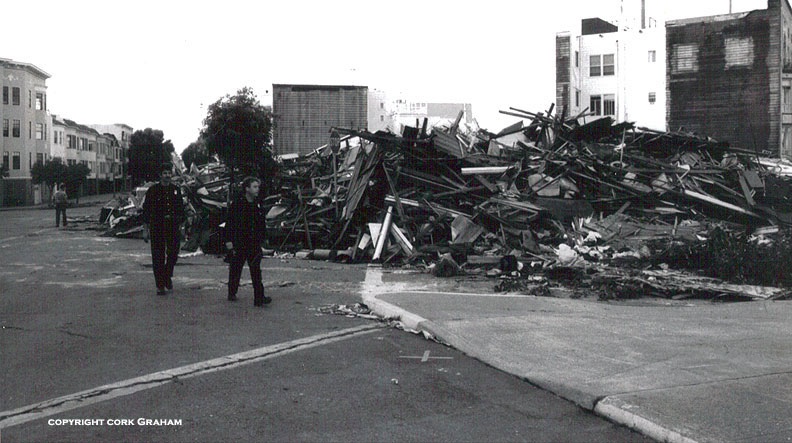
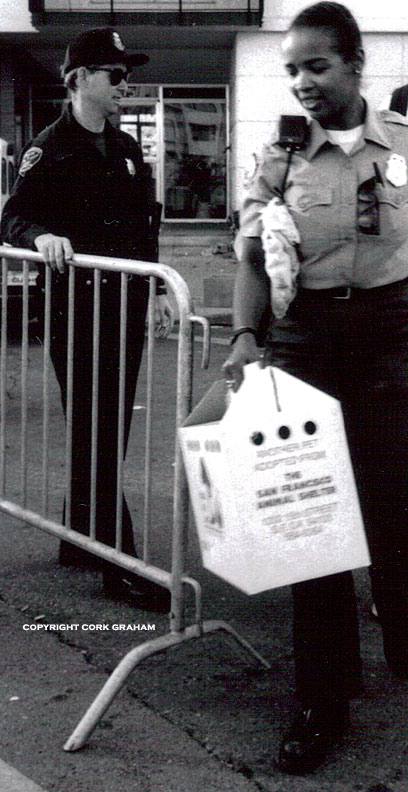
Where Were You During Loma Prieta: Oct. 17, 1989?
At 5:04 p.m. I was on my motorcycle having just left Bair Island Storage on the east side of 101 in Redwood City (a parking lot and defunct Century Park 12 are there now) when all hell broke loose. Only the day before I had adjusted the chain on my Yamaha 400 and thought I had done something wrong. Both wheels vibrated as though ready to fly off!
Pulling to the side, I leaned the motorcycle left and right to see what was loose. The wheels were solidly attached. If I wasn’t wearing a helmet (in those days you didn’t have to wear one) I’d probably have been scratching my head. That’s when I looked up to see the line of street lamps swinging back and forth like metronomes—I had just experienced an earthquake, and a big one at that!
To my left, all the cars that had been speeding along on HWY 101 were pulled to the side of the road. People were out of their cars and talking, stunned looks on their faces. I drove to Belmont to check on my parents and then headed up to San Francisco to check on my girlfriend. All was good, and then I got a call from my Emmy and Edward R. Murrow-winning camera buddy, Mark Eveslage.
His producer needed someone with a motorcycle to run tapes between the shooting locations and the KRON affiliate for NBC on Van Ness. I wasn’t too interested; I was only in San Francisco as a break from the war in Central America. But, then they told me how much I’d get paid.
In minutes I was on my Yamaha and lane-splitting through non-stop, stop-and-go traffic from Milbrae to San Francisco: people trying to get to San Francisco from work, trying to get past bridges that closed, like the Bay Bridge whose top section had dropped. I made it in record time and expected to start running tapes immediately.
As I made my way carefully down dark halls, I noticed Jerry Graham. Before Doug McConnell hosted “Bay Area Backroads” for 15 years, there was Jerry Graham, a KSAN general manager who started the show by travelling the state with a cameraman capturing the fun places to visit in California. Never did my parents miss an episode…plus he was a fellow Graham, and you know how the Scots are about clan names.
So, even though I had as a photojournalist in Southeast Asia and Central America met kings, sultans, presidents and generals, seeing a family mainstay kind of hit me with awe…until I heard an NBC employee make a snide remark that made me chuckle with the others who had heard: “You better start looking for a job!”
As I left, the electric generators started running and KRON looked more like a jungle firebase I’d have seen back in El Salvador, a lone white-walled fort illuminated in the night.
A quick drive down to San Bruno to fill up on food and gas and I was back in San Francisco. As I unloaded the goodies for the crew, I noticed an Asian man in his early 30s who introduced himself as Steve Sung. What caught my eye what I’d seen too many times in the war zones.
With a nod toward the long, indented scar up along his arm, I asked “Where’d you get that?”
“I was an audio tech at Jonestown,” he said.
I recalled the massacre, the Kool-Aid suicide, and the reporters hitting the deck as gunmen ambushed the US delegation and them at the airfield. One of those killed was SF Examiner photographer Greg Robinson, after whom a darkroom and scholarship would be named at our alma mater, San Francisco State University.
Dotson is probably one of the nicest guys you’ll meet in the media; Jamieson had some interesting things to say about baseball, especially to the baby-faced kid I was then; and Brokaw didn’t look like he wanted to be there at all. Frankly, I, too, would have preferred to be in LA at a tennis match with family instead of joining in on what I would later learn was the “Media Zoo.”
Introductions passed around, the reporters moved on to their reporting, and I went onto shuffling producers, assistant producers and tapes back and forth between the Marina and KRON.
It was pretty easy work, actually one of the first duties I got paid for in El Salvador as I made extra cash as a translator and gofer for visiting networks in San Salvador. The producers in San Francisco, though, didn’t like the speed with which I flew along Franklin to get them to the Marina the first time. I was just back in Salvador mode where you didn’t stop at lights, red light nor not, else the banditos and FMLN guerrillas carjacked you.
One producer, who was only memorable for his blond flattop and constant scowl, really got on my nerves. I got a kick out making him squirm with my lead foot on the gas pedal. A little fun until I saw what has happening at the Marina. Night battles in Central America couldn’t have been more lit!
Water was everywhere. Flames were everywhere the water wasn’t. As if in a dance in the Infierno, were the shadows and silhouettes of firemen doing their best keep the fire at bay. When you see a city block ablaze in San Francisco it leaves an impression!
By morning the San Francisco Fire Department had pretty much conquered the fire, and I signed for a stack of $50 bills from NBC. On the way south on 101 I noticed the trailer for my previous employer in El Salvador, the Associated Press. I stopped in and was immediately reminded why I had gotten fed up with being a photojournalist. “I want fires, blood, bodies—if it bleeds it leads!” the AP bureau chief said, like so many other before him.
“Okay,” I said. “I’ll see what I can do.” Even though I strung for them out of Bangkok and San Salvador, I couldn’t get a press card from them in time here in San Francisco.
So, what did I do? I made one—pretty official with the blaze orange tape and laminated. It was amazing what a laminated card could get you a pass to during the pre-1990s computerized, holographic identification card.
As the Oakland cop checked out the press credential—one thing you learn through having to use forged documents in foreign countries, in very dangerous places, is that it’s all about attitude. I’d been in enough successful events to act properly: a nod of thank you and pleasant smile as you pass.
That’s when it really hit me how much of a journalism zoo the Bay Area had become. Frankly it turned my stomach—almost as much as when I decided to stop covering the war in Central America because of the inaccuracy of reportage I was seeing, and how everyone went around on “media safaris” in their cute little white vans and the letters “TV” taped on the side.
Sure, I followed along on the guide tour setup by the Oakland Police Department. They didn’t want anyone climbing and getting up close to the crushed bodies that still had to be removed from the structure above. Plus, it was perilous enough standing under the overpass that still supported not only the crushed vehicles and bodies, but also the tons of upper-level structure.
After only a few shots, after nearly seven years in combat photography in Southeast Asia and Central America, I took a break and asked a man sitting on a pile of large rubble if I could share the bench. There’s a stat running around the journalism field that says the average life expectancy of a majority of journalists is age 30, and then it’s off to PR or advertising for some big corporation or city. That day as I sat there thinking, I realized I had beat that by seven years, having started as an 18-year-old in Thailand—I was truly done…
Introducing myself to the man who shared the rubble with me, I learned he was Dr. Williams from Colorado. His trade was psychology. A Vietnam veteran who not only worked with fellow veterans dealing with post-traumatic stress disorder (PTSD), he had volunteered to assist first response emergency teams pulling the dead and wounded deal with the emotional and psychological impact of their experience.
As we talked about the symptoms of PTSD, I realized that while I had done the work needed to heal the traumatic childhood memories of living in Saigon during some of the worst events of the Vietnam War, later described in my 2004 Topseller, The Bamboo Chest, I had added new events during my years in Central America from 1985 to 1989 that had caused subconscious responses easily labeled PTSD. Leaving Oakland with exposed film I didn’t even take to the makeshift AP bureau office for developing, I went home.
Within six months I had broken off an engagement from my girlfriend who had become my fiancé. Within two days of the final blows of separation, I was in a VW van, packed with books, rifle, shotgun and fishing rods and headed north along the AlCan. And within nine days of that I was moving into a cabin overlooking dramatic and healing beauty of Cook Inlet and Mount Redoubt in Alaska.
I arrived to write the first draft of my first memoir and work on the psychological effects from my combat experiences in Central America, soon to be captured in my next memoir my agent is preparing to take ‘round the publishing houses in New York.
Monday, June 22, 2009
"Memories of an Interesting Life" by Col. John H. Roush (RET)
Born in Oregon in 1923, he moved to San Francisco at the start of the Great Depression. To hear Roush talk about that time it’s as though a different world, more reflecting the San Francisco that had so pleased my father, when he was a communications instructor for the US Marine Corps at Treasure Island during the Korean War, that he would later move his family to the Bay Area after years overseas.
Memoirs of an Interesting Life not only recants those times of San Francisco's grand days, but also a life during WWII in Europe, fishing and hunting around the world, and in eloquent style sharing his love and admiration for his wife and family. And no less interesting the life of a professional soldier willing to talk openly about such subjects as death, ghosts and Divine intervention.
Roush describsd with great detail memories at such a young age, the days after the death of his grandmother, seeing her rocking in her chair in the living room, and a cousin saying that he saw her seated in church. For many this might seem bizarre in this modern world where death is not as impacting as it once was due to video games that lessen the emotional impact of loss due to death, and science that has done such a good job in prolonging the lives of those who only 20 or 30 years ago would have perished at birth.
But, for those of us who were in harms way, as Roush most definitely was during the Battle of the Bulge, noted by a statistic that 90 percent of platoon leaders were killed during WWII, being visited by the dead shortly after their can be a common occurrence. Is it the mind playing games? Or, a last chance for us all to say goodbye? Whichever it is, hard for me as a reader to say, no, it didn’t happen. And it sure makes for interesting reading!
As a combat veteran myself who has a pretty good understanding of the psychological impact of war (My first memories are of the Tet Offensive, I spent 4 years in the Central America War and worked for 10 years as counselor for those dealing with PTSD) I was especially intrigued by comments about post-traumatic stress disorder, something I don’t really consider a disorder, and actually a normal response to very traumatic events, but can be especially aggravated when tainted by stigma and cultural misunderstandings. Many deal with combat-related PTSD every day, and it affects their lives in no way other than to remind those affected of that place and time they were tempered.
In reading the chapter titled, “Crack Up!” (Roush’s thoughts on PTSD), I was reminded of the differences of those who fought in Europe in contrast to those in the Pacific Theater. Roush mentions that he never experienced such effects. He recalls taking the time to “have a talk” with a cousin who returned from fighting in New Guinea. The very journalistic manner in which it is told offers the reader a clear cultural and historical understanding of why his cousin was so profoundly affected by PTSD and Roush wasn’t.
This was the same argument put by Vietnam Veterans that the war in the Asia was so effecting in PTSD because of the lack of bonding and post-combat processing: that the important talking it out with those who were there (replicated later by VA counseling sessions), and also the cultural differences of fighting in Asia which seemed so foreign, as compared to Europe where a victorious Allied soldier more easily felt a liberating hero, moving along a countryside and language barriers not as different than those heard back home, as it was for many US combatants island-hopping through cultural and people so foreign on their way to Japan.
Perhaps as more government and military personnel learn PTSD isn’t a disorder or syndrome and really just a natural post-event response to traumatic events and very healthy when understood and worked with, free of stigma, calling it instead what I do--PTSR (Post-Traumatic Stress Response)--the more extreme symptoms and reactions will lessen and disappear for those returning home.
And what does a warrior think of more than getting back when the war is over: wife, family, good things in life! No wonder the return from WWII for those who survived was one of the wealthiest moments in US. A real swords to plowshares moment!
…But the Army wasn’t done with Lt. Roush—they put him in Austria.
Though his depictions of fighting in WWII are short, already having been described in critically acclaimed World War II Reminiscences, 1996, more recanting of what life was like in Austria right after the war are delivered in more detail in “Memories of an Interesting Life”. Of course there’s more hunting, often just to cut the boredom and meager offerings of army food, but it’s also telling information about a country bringing itself out of its prior furor as Hitler’s birth nation.
Finally, Roush gets to come home and get married and build a family. Two sons carry his name and the same love of hunting and fishing. There’s the fishing for mega-sized Mackinaw trout that used to swim in great numbers in Lake Tahoe. Nimrod adventures in New Zealand, Africa. Angling for a sharks, salmon, and tarpon. In all there’s a feeling of appreciation for having been able to come back and enjoy, though only through reading, what his generation had as the opportunity to have experienced…
The books are priced at $30 for soft cover and $40 for hardcover, autographed, postage and mailing included. Please send checks to Col. John Roush at 600 Deer Valley Road, # 2E, San Rafael, CA 94903, or FAX 415-499-5112
It can also be ordered through Amazon.com, but without a signature, of course:
Monday, January 14, 2008
Cork's Crash Course in Foreign Languages (Part I)
How do I do it?
Well, that's what I'm going to share with you in three installments. This is because language learning involves an understanding of three components: personal makeup/attitude, understanding of how languages came to be, and language groupings. After all this, I'll give you a cheat sheet to use in your language learning that will skyrocket your learning speed!
Let's first start with personal makeup. What I'm talking about here is what you believe you can do. If you think learning languages is hard, then it'll be hard. If you think it's not fun, and just boring, or an aside to what you'd prefer to be doing, then you'll fail miserably. If your thinking feeds speed, then you think that language learning is fun, exciting, a great way to increase your financial quotient, and most of all...easy...then you're right, too!
Language learning and improvement is an all day experience! You use words when you think to yourself. You use words to philosophize and plan. You use words when you play games and goof off. So why do most language learners think that learning languages is done only during a 30 minute or one hour study or class event?
When you take the time to assess what you can incorporate into your day-to-day toward your language learning, you halve and quarter your learning time. And it makes it 'REAL', and much more fun!
Take for example the news. You can watch the ABC, NBC, CBS, Fox News or the BBC, or you could get a cable/satellite subscription to a channel that provides the news in the language of your interest. Now with online access to many channels and foreign language periodicals you can improve your vocabulary and grammar by reading foreign language newspapers online!
When you rent a DVD for the evening's entertainment, do you just get the latest from Hollywood, or do you search out a film produced in the language of your choice? Because of independent film production and the advent of so many new technologies to shoot movies of near-film quality on digital video there are a multitude of films in Finnish, Norwegian, Swedish, Malaysian, Thai, Mandarin, Cantonese, Hindi, Bengali, Vietnamese and of course, German, French and Russian to name just but a few...
As for food, do you go to Burger King, or the nearest restaurant in your town with cuisine of your target language? And it's pretty cool when you've made a new friend with the owner as a result of interest in their native language. Ron Kinney, a friend of mine in Honduras, who was a photograher for Reuters in Tegucigalpa, told me he learned how to speak Spanish through his years working in a restaurant before leaving to cover the war in Central America.
Remember it's all about making it fun and interesting...and most of all remember that language came about as the result of experience. Words came to being as a way to describe what the habitat, food, culture, politics, and all the other day-to-day events in a human being's life were like and for us to navigate through society. More about this in PART II, which will help you in your language learning adventure!
Friday, December 14, 2007
What's in a bowl?
Sunday, December 02, 2007
"If you're going to San Francisco...remember to put a flower in your hair..."
Thursday, August 16, 2007
A Lesson in Hangul!
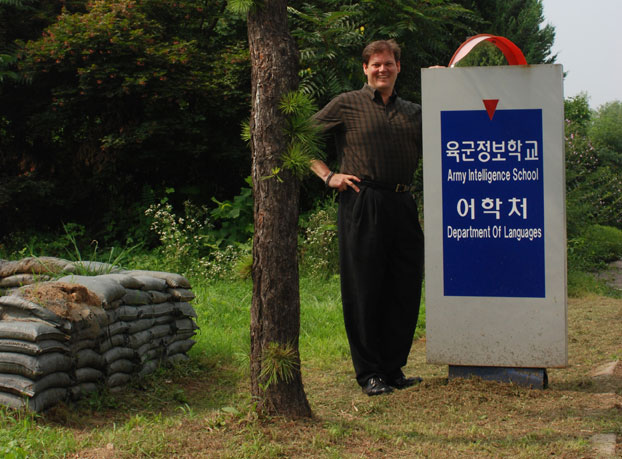
Well, here I am in South Korea, otherwise known as the ROK, learning the language and the culture. Let me tell you it has been a real eye-0pener into many things, least of which is using Blogger.com/Google.com. Did you know that if you have an Internet connection here, eventhough you're set for English, you get Hangul, or Korean script?
So what am I doing here?
Getting my film writing and directing career going...and teaching at the Korean Army MIL INTEL Language School for a one year business visa, of course!
Thursday, March 08, 2007
Are you in San Francisco on March 8th at 7 p.m.?
Monday, April 24, 2006
MORE AUDIAL THAN VISUAL?
By going to my homepage at corkgraham.com you’ll be able to listen me to tell you about all my websites and specials! All you have to do is click the play button. And, when you sign up for the FREE STUFF, you’ll be able to continue playing the message.
Wednesday, March 29, 2006
Cork's Photo Gallery is UP, UP and AWAY!
Been mad at work marketing my photos of the 'ole' days, and just wanted to make sure you had a chance to take a look at them before my next post. They're residing here: www.corkincombat.com
Chat with you in a few days!
Slainte,
Cork
Wednesday, February 01, 2006
COWARDICE BE DAMNED!
…changing your mind, convincing yourself that you really didn’t want it, that dream, in the first place?
Everyday I meet people going through their day:
looking at those with whom they want to be…
daydreaming about that new job…
wishing on that new home…
visualizing on that vacation…
And then there’s the opportunity:
--she’s in the aisle right next to you!
--he’s walking your way!
--you see the listing just like you would have written for your dream home!
--a friend is leaving on a trip to the very vacation hotspot you read hungrily about…and says there’s one seat left!
…and you do nothing…
EXCEPT:
think to yourself that the one you were dreaming about wasn’t really the one you wanted
…that you need to keep working at that job you’ve been slaving away at for just a little longer
…that it’s not the right time to buy a home right now
…that you just don’t have the time or money to take that trip
…that you’ll take that trip…next…year…
And you know what it all boils down to?
COWARDICE!
NO WAY, you say!
I really didn’t make my right choice for that perfect mate…I do need to build my reputation first at work…and on and on…
But here’s the clincher: it’s actually a NORMAL reaction…
Everyone is genetically predisposed to running when they should stand and fight…you wouldn’t be here if you didn’t have that genetically and behaviorally imprinted into your psyche.
Or, in other words: you’re the black bear and not the grizzly.
There’s only one reason the last recorded grizzly bear was sighted in the wilds of California was 1922, while at this very moment California has one of the largest black bear populations in the world: black bears 90 percent of the time run when confronted with a danger, while grizzlies will likely charge!
Charging a Pomo California Native only armed with a stick bow, is quite different from going after an armed Spaniard or as the last one did, an armed rancher in Northern California: as long as the ball had enough powder behind it and shooter had wits about him to make a good shot, the griz always ended up with the short end of the confrontation.
And back to a human interpretation: governments and institutions love followers and do their best to weed out those that give lip and or start revolutions.
But, do you know where the human equivalent of the grizzly actually does well, not only well, but PHENOMENALLY well?
In business!
Successful CEOs, multi-million dollar sales copywriters, and gawd awfully rich entrepreneurs are those who fought the ingrained urge of flight and do well because of their grizzly tendencies…
Now here’s the beauty of life that I so enjoy about LIFE: it’s all yin and yang, light and dark and while, yes, humans are setup for flight, they also have that OPPOSITE OF COWARDICE genetically ingrained: BRAVERY and COURAGE!
The BRAVERY to realize that a dream can’t be left to others to give them—that only one responsible to YOUR HAPPINESS and JOY is YOU!
The COURAGE to stop complaining about what’s wrong with the scene before you and to MAKE IT THE WORLD YOU DESIRE!
…If you’re poor and broke, you MAKE MONEY!
…If you’re lonely, you MAKE INTRODUCTIONS!
…If you’re bored, you MAKE IT EXCITING!
…If you want to travel, you GET ON THE PLANE!
--What you DON’T do is MAKE EXCUSES!
Take for example my new friend, Myles O’Reilly from Dublin, a man whom I was drawn to immediately, not only for his embracing charm, but a great gift of the Blarney, but also that he had so many life adventures that only hinted at his zest for life
…could it have been that like so many who have learned to appreciate life through the spiritually edifying, yet heart-wrenching, experiences of losing two relatives, murdered by the British Army and Secret Service in their own pub in Belfast (March 7, 1977, or a brother to a couple thugs in Puerto Rico, who killed him for his watch?
…Or, a death of friend that reminded me of the loss of my own cousin in Ecuador, to whom I dedicated in memoriam The Bamboo Chest: 12,000 feet to the ground when his chute didn’t open…
Myles O'Reilly and Robin (yes, the Robin from the Epilogue of The Bamboo Chest)
For whatever reason, it’s the courage and bravery that pushed Myles to not only do missionary work in Goa, India, become a promoter of such musicians as Van Morrison, Donovan, and thrive as the builder and owner of San Francisco’s Best Irish Pub: O’Reilly’s Irish Pub!
But here’s the challenge, you get profoundly successful like Myles and certain boobytraps of taking on new challenges suddenly start appearing bigger and more pronounced than they were when you’re starting from scratch, ones that most would think were removed and destroyed with the first ventures turned to gold: fears of failure mainly…
…will we come in on time?
…will the public clamor for our gift or turn their attentions to something, or someone else?
…or as Myles said, “My, GOD, I’ve just found myself $7 Million in DEBT!!”
I reminded him that Donald Trump was somewhere $1.8 Billion in the hole: the question is good debt, or bad debt?
When I bought a new Dodge Ram 2500, on LEASE of all things—that was BAAAAAAD debt!
Owning many billions worth of real estate for the loan of $1.8 Billion is VERY GOOD debt…
A HIGH CLASS IRISH PUB and RESTAURANT that is PACKED BY 7:30 p.m. on a Saturday evening for $7 Million is EXCELLENT DEBT!!!
I looked around Myles’ NEW ESTABLISHMENT O’Reilly’s Holy Grail on Polk Street in what used to be the old Mayes House, opened in 1867 and had Jack London as one of its patrons…
There were the stained glass windows Myles had purchased from the church and boarding school, Belcamp College…the Greco on the back wall, and…
The final fact that completely blew me away: EVERYTHING in was what the ORIGINAL MAYES OYSTER HOUSE was REMODELED!
Not one bit, even the ceiling was raised from its original height…
Most importantly, I looked around the bar and the separate dinning room, how packed it was, how many of the people in the bar were actually enjoying an expertly poured drink in wait for their reserved table…it was that packed by 7:30…that I had to pat Myles on the back and say, “$7 Million in debt…CONGRATULATIONS!”
But, I didn’t have to wait until 7:30 p.m. to know that O’Reilly’s Holy Grail is well on its way to becoming one of San Francisco’s MUST VISIT watering-holes and restaurants…
I’ll let you in on a secret, so secret that many aren’t even aware of how and why this works: if you want to know if the chef is worth his or her salt, try their desserts first!
Robin and the GREAT restaurant indicator...
And when it’s a crème brulee (or a Tiramisu at an Italian restaurant) you’ll know in a pinch whether the rest of the food’s going to be good, whether a place DESERVES your REPEAT PATRONAGE…
A well-prepared crème brulee:
So, why the crème brulee to test: it’s too darned easy to make a bad one—and every reason for a bad one, reflects a lack of attention to detail!
It’s one of the reasons next to being brave and courageous that has led to THE RICH JERK doing MUCH BETTER in sales, and low returns, than The Rich Dummy …something I will go much further into in my next piece…
NEXT TIME:
Like the song by Tina Turner asks, “What’s love got to do with it?”
Well, I’m going to tell you...namely what makes people take hold and move from the public norm of taking life like a dinghy in a tossed sea, to moving through all chop like a freighter piloted by a captain headed for TREASURE ISLAND!
Monday, January 09, 2006
WHO ELSE WANTS MORE MONEY from WRITING?
You never know how much you’re missed until you disappear for a while! :)
Well, for those of you who were paying attention: the book signing in DC with Joe Galloway was fantastic—we garnered $10,000 in donations for Viet-American survivors of Katrina and a new Vietnamese Cultural Center in the Washington DC area…not bad for only 13 signed paperbacks of The Bamboo Chest and 3 hardcovers of We Were Soldiers Once... and Young (albiet Joe’s were not only signed by him but also General Moore, who was played by Mel Gibson in the movie)!
The fundraiser was held in a fantastic Chinese restaurant in the area. Here’s a photo of me, Joe, Don Duong, from WWS, Green Dragon, and Three Seasons, and who will be playing my interrogator/translator, Chan Le, in the movie based on The Bamboo Chest, and the fundraiser organizer, Lien Tran. Behind us is one of the most famous singers in the Vietnamese and Vietnamese-American community: Thu Phuong…she had to defect from the Socialist Republic of Vietnam the same year as Don: Don because he was in Green Dragon and WWSO, and Thu because she was working on a recording deal in L.A. and Hanoi was afraid she wasn’t going to return—talk about counter-incentive!
The next day, Joe and I spent going over plans for a movie that Joe and I will be writing this fall, and I’ll be directing sometime in the coming two years…would love to tell you what it’s about, but until we’ve written it can’t say much more than…it’s a piece of history that has been lost and is such a GREAT STORY!
Here’s a portrait I really like that I took of Joe being introspective about war, combat, and unwinding with a smoke as we talked about the good-ole-bad-ole days: we not only shared time in Vietnam during a few of the same years, but also Singapore—he actually wrote a piece that saved the Raffles Hotel from Lee Kwan Yew’s demolition (Lee Kwan wanted to take down anything that reminded of the British Empire’s rule of Singapore)!
The Raffles is where the Singapore Sling was designed by a Hainanese-Chinese, called Mr. Ngiam Tong Boon, in 1910, by the way…
As I write this, Joe is in Iraq somewhere, doing a piece on their and our militaries…invited by none other than the Secretary of Defense, our man in the chow hall…Don Rummy :)
Got to love those nicknames that come up…when I was a Naval midshipman we had to know the names of all main government and military commanders, our man then was “The Friendly Ghost”, Casper Weinberg.
Anyway, if you’ve got some good thoughts and prayers, send them Joe’s way… I sure don’t want him having his butt modified by a carbomb!
…Human psychology…a very interesting study I enjoy touching on in every piece I write—and no wonder since I was a drug and alcohol rehab counselor for five years for Friendship House Association of American Indians…and understanding my own mind is the only reason after all the times I almost caught a bullet, or ended up in Davy Jones’ locker that I’m even able to be here to write you…like I like to say: knowledge is not power—knowledge and the implementation of knowledge is power…and increased survivability!
Take for example the human condition as revolves around money, wealth, CASH and how when you give people what they want, they take if for granted, but withhold even slightly and the dogs of war are unleashed to get it back…and they’ll pay whatever it takes to get it back…
Isn’t it amazing when you find out who’s really making lots of money on the Internet…and who isn’t?
If you’re like me you like to make tons of cash not just when you’re actually working but also when you’re having fun, while you’re away from the “office”…and one of the best places to do that is my own big-little copywriting laboratory—eBay.com!
On average, just tinkering and playing around—experimenting, I’ve averaged $2,500 to $3,000 a month selling stuff on eBay. I’ve sold everything from ancient whale vertebraes, curios from Southeast Asia, all the way to one of my crowning glories: a C.C. Roberts Mud Puppy Muskie lure for $299.97…
That’s $299.97 for a fishing lure!! Here’s the sales page: Cork’s MudPuppy on eBay
My great uncle probably spent about ten cents on that “puppy”!
You’ve probably heard about all these “hidden” treasures that reside in the attics, basements, and garages of you and me…but how many people are willing to look?
Before the Internet and eBay, the main option for selling such long lost goodies was an ad in a magazine, newspaper, or on TV. Now, we’re talking dollars, here, not what it costs to post at eBay: cents!
Depending on how you place your ad, you can make a mint!
So what makes eBay such a money-maker for those in the know?
These are some reasons to start:
- Large market base—millions of visitors a month…how many stores can boast that out of one location?
- Ease of use by sellers and buyers: search engines, and special searches, and photos!
- The ability for a marketer to use the most efficient tools for copywriting—font and line control!
Other than that, reward is based on a potential eBay moguls ability to convince people to visit the page, read the script and finally…
Make a Bid!
What this all leads back is to the question: do you buy logically, or emotionally…an actions that can be considered illogical.
You’ve seen it many times…
A person says they’re not going to sell for anything less than say, $20,000 for a used Volvo….
Prospective buyers come and go, not making the $20,000 the seller offers—one couple even goes as high as $18,000 in cash…
But the guy just won’t sell!
Then, another prospective buyer comes up and admires the car, a young man by the seller’s standards, really shows an appreciation not only for the car, with a strong knowledge of the importance of that model, but that the seller also understands the importance, too!
Rapport is built between the seller and the buyer, and though the seller had promised his wife that he wouldn’t sell for less than $20,000, he ends up selling to the young man for $13,000!
How could that be?
He went through at least 10 calls, five visits and five offers, four of which were well over the $13,000…
What happened?
--Right person at the right time!
And you may have also surmised correctly that while the others were only interested in the car, and were going just going for a “deal” on a machine that would get them to work and shopping, the one who finally got the Volvo was not just another potential buyer, but was also qualifying himself: he sold himself by connecting EMOTIONALLY with the seller!
Making money on eBay is pretty much the same, except rapport isn’t built by interacting verbally. Rapport is built by recognizing who would best be served by what you have to offer and then delivering thoughts, ideas, and facts to them that mesh with their understanding of the world as they see it and want to see it…
There are four main points to moving ahead of the pack:
- Timing
- Placement
- Pricing
- Description of the item that draws the highest paying bidders appropriate to the item!
Timing has various meanings on eBAy. There’s global timing, which means that you have an item that is in much demand at that time—either because there’s a fad, or because it’s a new version of a product with a long history: all of which are in your favor!
Timing also refers to when you place your item. One of the biggest selling products on the market now is the one by Jock Cockrum in Silent Sales Machine Hiding on eBay. He suggests listing items for bid on Sunday evenings at 7, based on the theory that Sunday evenings are the times when most people will have time to relax before the new work week and do a lot of surfing…
What I’ve learned is that I’m selling on Sunday evenings at 7, I mainly selling to other people trying to make money on eBay: and there’s nothing worse than selling to someone who’s buying your product for to make more money on it—why?
First of all, on average, because there are so many people trying it, buying and selling within the eBay world, is not as good as buying outside the circle and then selling within the arena of eBay.
The best way to do well if you must buy at eBay is finding an item that not too many people are clued into the potential price. If anything the reason to purchase on eBay to make money is to make the purchase on eBay and then sell somewhere else.
On that premise, the better way to really succeed at eBay is to purchase outside eBay and then list. Why? Like anywhere else you can make a mess of money: your money is made not at the time of sale, but at the time of purchase!
If you can get the item for incredibly low price, then the relation of expense to resale value is much better…this is one of the reasons someone like the THE RICH JERK is doing so well—he understands the real strategy about making money like Chris Carpenter with Google Adsense Words!
These are two people who know when to buy, i.e. advertising keywords, how cheaply to buy at…and when to sell and for how high in another venue. It’s a skill learned through practice and trial and error. Sometimes you sometimes you take a hit on your purchase price for the item and wrongly think you’re going to do well on the eBay sale. Then, other times you sell for not only the “buy it now” price but it’s gone in one night!
But, to get the most bang for your buck—to make money at eBay, you need good sales copywriting skills..and do you know what those are?
Getting a potential customer to read the first headline and to not stop until he or she gets to the end, fills in a higher bid, and clicks “Place Bid” or better yet..sometimes, the “Buy It Now” button.
That takes a lot of “emotional” rapport…getting across to the eBay page visitor that you are an authority on the subject or your product you’re offering, that you understanding and appreciate all that bidder is going through emotionally (the expense, and the potential joys of owning what you have to offer) and that he or she MUST buy it now, else go through the remorse of losing the bid…
And the best way to do that is tell a story!
Tell a story that puts the bidder in action using whatever you’re auctioning: have them experience all that they will experience when they have the item in their possession, remind them all they have to do is make a worthwhile bid…then emphasize that the time is short and then do it again…amazing how well that works—people really have a short attention span, especially if they’ve gone through the mental process of
It’s appalling how many potentially great sales copywriters out there write copy that gets the reader so excited about the product: feeling every emotion, every physical sensation as though it were real…then, fumble without delivering the call to action—the potential bidder just clicks another button and is gone!
And so, like I promised: you need to know about making money on without spending a single cent on a TV product on selling eBay…but if you don’t feel that is enough, then, perhaps you do need to read the FREE newsletter available here: Silent Sales Machine Hiding on eBay
Next Time:
Let me ask you, which do you think sells more copies:
….The Rich Jerk
Or… The Rich Dummy?
In the next installment I’ll tell you which one, and more importantly—why! If you make your main money convincing people to buy—either marketing or sales…or even if you’ve just got a product or service and don’t know how to get it out to your target customer—you’ll want to make sure you’re subscribed so that you don’t waste anymore money and time!
Thursday, October 20, 2005
THE PERSUASION EQUATION MASTER (PART II)
…when done correctly a successful agreement occurs because of a collection of events that lead up to the goal…which almost seems to have come to fruition on its own—ah the wonders of POWER PERSUASION!
First, I need to tell you about my friend, Knight Ridder military correspondent Joe Galloway, author of the bestseller We Were Soldiers Once..And Young: Ia Drang--The Battle That Changed The War In Vietnam
Joe sent me a copy of his latest column for Knight Ridder that is so well written and poignant (a remembering and passing of the guard), titled:
Gathering for a dose of fellowship, memories among old soldiers”
If you want to know what these guys went through, you’ve got to read the book or watch the DVD!
Back to PART II:Most startling about that scene in “Platoon” was that NVA prisoner’s look of defiance…
Defiance is the response most to be avoided in any interrogation, personal interaction, or anytime you’re trying to convince or persuade: you’d be amazed how many are so willing to talk before an interrogation starts, and are so quickly to turned into allies just by letting them…without beating them on the head—physically or verbally…
If you saw the piddly, anger-filled interrogation of an Iraqi terrorista by that ning-nong LT in “Over There” last night, you know exactly what not to do in an interrogation…much less an attempt to persuade.
Would you believe that after my release from Vietnam in 1984, after getting one of those mindless office jobs, i.e. mailboy, at a stockbrokerage, I actually observed a broker yelling at a client to buy?!
Percentage-wise, hammer-handed tactics hardly ever work….and once you build a sense of defiance in your subject, you’ve lost for the very reasons that Lakhani mentions in his persuasion bible: “Persuasion: The Art of Getting What You Want”.
Back to the "Six Tenets of Persuasion" Lakhani describes in his book:
- Outcome based
- Best-Interest Focused
- Truthful
- Goal and Time Oriented
- Personal
- Ethical
Any negotiation, sale (even a piece of sales copy!)… basically every good persuasion event always starts with a detailed outcome if not on paper, then at least in your mind. All great negotiations, sales, and even an interrogation starts with an objective: closing a specific deal, completing sale, or even deciding whether you’re just after accurate information or you want much more—turn an enenmy combatant into a double-agent—all rely on your envisioned outcome.
Then, throughout the process of persuasion, you have to do a self-check to make sure that the whole event and “outcome” passes the “Best-Interest” filter: is this good for you and your subject? That may seem clear in a sales or negotiation: but an interrogation? Absolutely!
How will your subject fare during and after the successful interrogation: will he be taken out and shot ( or put through a mock-execution, as they stupidly did to me in Vietnam) or will the subject get better food, a softer bed to sleep in after being cooperative?
Remember we’re trained like this since childhood: the difference is whether we’re raised by abusive parents who actually beat a kid, or punish appropriately—in the long run, grounding is much more effective on a child than whipping (spare the rod, spoil the child is another topic way too long to get into here).
If you’ve verified the first two tenets, then the third is very easy to confirm: are you being truthful? Remember: all successful persuasion events are based on congruency. Everyone can tell in-congruency, either consciously or through subconscious reaction. If you’re untruthful and incongruent (like an insecure man trying to “act” confident in front of his woman of desire) this occurs, rapport is lost and replaced with lack of trust and ultimately defiance…
Depending on time constraints and environment you may be able to regain trust, but once you hit defiance the subject is basically lost: this is one of the reasons in law enforcement the worst one to interview either the subject or witnesses is the arresting officer—best to send investigators to the interview the list of names previously collected by officers at the scene of the arrest.
FIRST IMPRESSIONS have more importance than most people are willing to admit!
And so we’re brought back to your GOAL and TIME orientation with regards to outcome: you need to ask yourself what achieved goal within what time frame will be interpreted as a success? You need to do this BEFORE you approach the interaction!
Let’s say you’re a field interrogator in a jungle war: if the subject tells you where the boobytrap are placed around the village, and tells you within the next hour will this be a success? What if he/she tells you, but it takes two hours? Two days? Are these acceptable?
If you’re in a sales environment, what if you get the sale, but the customer can’t pay you in one payment—is this acceptable? What if she can pay the whole amount in one payment, but it’ll take one more week? Will you accept a contract to pay? Or word? These are all possible outcomes and it’s up to you to have them clear before going in, because….
Your goal and time objectives will be matched against the subjects.
Now for the hardest tenet for many, especially if you don’t take to heart first four: PERSONAL.
To this day, I still have no strong animosity to Mr. Le, one of my interrogators in Vietnam, who was also the translator. Why? He was very personable. Except for the time I tried to escape, he never hit me…unlike some of other apes. He also had a very likeable aura about him: he was after all a French language teacher at a local Saigon university…and during the war he had spent time in a South Vietnamese prison for his college demonstration participation. Once he realized I was just a kid on his first photo assignment, he softened up and was quite friendly…as much as permitted within an interrogator/political prisoner interaction.
My memory of him was recalled when I later studied one of the most effective German interrogators during WWII: master interrogator Hans Scharff at Dulag Luft. As one Allied prisoner said of him: “Hanns could probably get a confession of infidelity from a nun”
HIS SECRET?
--he treated his subjects with “RESPECT and DIGNITY”. It’s that simple…well not THAT simple, but you get the drift...
Scharff was known for many acts of kindness and looking out for the well-fare of the prisoner—how many other prisoners who were hung for their warcrimes could say that? Would you believe that many of the Allied pilots he debriefed actually became friends after the war? Now that’s a GREAT PERSUASION—though he didn’t have access to Lakhani’s book, he intuitively knew all of six of Lakhani’s “Tenets of Persuasion”!
Many of Scharff’s most productive interrogations occurred while making a leisurely stroll around one of the compounds gardens…simple conversations in deep rapport—you can’t get into rapport if you don’t give of yourself, first: being PERSONAL. Very much in contrast to the fist and boot tactics of the SS, and Stalin’s KGB, or the amateurs of Abu Ghraib for that matter. And I bet you Sen. John McCain has no interest in writing to his interrogators…
And so we arrive at the last tenet: ETHICAL
Scharff had impressive ethics and they came through in his interactions which easily helped drop the defense (defiance) posture of his subjects, and also enabled him to reach rapid rapport: substitute “being one” for rapport and you get the deep meaning of “being in rapport”. He was able to become the “head” of this “body in rapport” (his subject) leading the body to speak and deliver what he needed.
Without an ethical center, rumors would have run rampant about Scharff’s in-congruency, bringing into question his truthfulness, personability, and best-interest focus. Without a center on some form of strong ethics, Scharff would have been labeled a person simply on the make…a manipulator: he would have been forced to act out of frustration, like the other interrogators, who physically tortured their subjects to arrive at questionable results.
As everyone successful in sales and business knows: your best customer is the one you already have—break the Six Tenets and the best you can expect is a one-time sale…and worse: a BAD REPUTATION!
Man, I love Lakhani’s book!
I wish I could spend days writing about all that he has written, but it’s best to just lead you there so that you can enjoy all the rest he has…especially his “Persuasion Equation”, where he has created a solid formula that can be minimized or expanded as you so desire.
What’s better about Lakhani’s book is that thought it offers you everything you need to know about amazingly effective persuasion, it’s a book about business and personal interactions, from a sociological and psychology point of view—very powerful!
Also, definitely check out this book on Scharff:
NEXT TIME:
If you’re like me you like to make money not just when you’re actually working but also when you’re having fun…would you believe that I love to write not only for my full-time work, but also during play? Matter of fact, I use eBay to test new and innovative sales copy writing techniques. In the next installment, I’ll save you money on any TV course you might be thinking of buying on how to make money on eBAy. Until then, you can check out my play page: Cork’s eBay Page
I’ll also let you in on a NOT SO SECRET fundraiser for the Vietnamese-American community hit by the hurricanes in the Southeast: Joe Galloway, me and the actor, Don Duong, who played Lt. Col. Nguyen Huu An in “We Were Soldiers Once”, and who is signed to play my interrogator, Mr. Le, in the upcoming movie based on my memoir, will all be attending Nov. 18th in Washington D.C. Joe and I will be donating signed copies of our books to the cause!
Sunday, October 16, 2005
THE PERSUASION EQUATION MASTER (PART 1)
First, I must say that I’m confounded by Bush’s resistance: anyone who has been in the US military knows that personnel are prevented from torturing because of the Geneva Convention, and even the Army Field Manual states that torture is not only illegal, but ineffective. More importantly, signing the amendment removes another propaganda opportunity for the terrorists.
But, it’s torture's ineffectiveness that revolves around TOLERANCE that really makes me ask—have we not learned? See when the Vietnamese were torturing me, I would have said anything to get them to stop—there would have been no accuracy in anything I said. There would have been more effect in the fear of torture than in the actual beating because what we create in our minds is what we have no defense against. Like working out in a gym, we can all build tolerance against pain...
SIDE NOTE: Many of you have written to me after reading my memoir to find out if I was tortured more than I described: of course I was, but for me to mention that extra amount in the The Bamboo Chest would have been distracting and off the point of the story—I basically used the events that fit the “coming of age” and “healing PTSD” story that is “The Bamboo Chest”.
Now if I were to have written about torture and interrogation tactics which are all directed toward persuading and manipulating, then I would have included more, or done something more beneficial…reveal persuasion techniques that don’t involve torture and are light years ahead of the pack!
As a negotiation specialist hired by Fortune 500 companies and government agencies to teach the fine art of negotiation, I am always on the lookout for the latest information that can’t be ignored: such as Dave Lakhani has delivered in his brilliant collection of battle-tested ideas in “Persuasion: The Art of Getting What You Want”
Almost magical persuasion revolves not around beating someone on the head, or putting them into embarrassing positions in front of the camera as in Abu Ghraib, but in making them see the similarities, building on those similarities and showing how unlike the enemy the subject is: an effectively turned enemy can be one of your most effective allies—if for no other reason than the information they carry from the other side!
It all comes down to what Lakhani calls “Tenets of Persuasion: if you follow them you not only get what you want, but you leave the person as an ally and potential “true believer”.
Here are the "Six Tenets of Persuasion" Lakhani describes in his book:
- Outcome based
- Best-Interest Focused
- Truthful
- Goal and Time Oriented
- Personal
- Ethical
Lakhani listed these because he wrote a book for people in dealing with people in business deals, marketing, and sales, even for just making a profoundly efficient impressions on people in day-to-day interactions, but how many of you would find that effective interrogations need these same tenets, not just for how we look to other countries, or how to do contrary only offers more fodder for the TERRORIST public relations fires?
Well as you’ve guessed this is a subject that I’ve learned not to take lightly. So, I’ve realized that I’ll have to make this a two-part series…
You can wait until the next installment to find out what’s more amazing about Lakhani’s book…how there are NEVER BEFORE PRINTED persuasion secrets that only the most effective orators, salespeople, politicians, military interrogators, and marketers know…or you could just get reading now getting his book here:
NEXT INSTALLMENT: You think you don’t need to know the skills of persuasion offered by Dave Lakhani, yet they’re used on you everyday. You think it’s only for people in sales, politics, or interrogation…but you can’t understand why your loved one can’t understand you… you’re about to get into a divorce…your team is just not getting the objectives and you’ve supposedly made them all clear…all the reasons for this will be revealed and what you can do about!
Friday, October 14, 2005
A WEE BIT O' THE OL' COUNTRY!
Imagine my surprise when the only time in years that I’ve pulled out the old Thomson family tree was also the week I met a woman from the actual Scottish town that one side of my family comes from: Elizabeth “Lizzie” Thomson, Lizzie was born on May 25, 1851, on the old farm in Dhuloch, Kirkolm Parish, Wigtownshire, Scotland, and after traveling through Canada to the American Midwest, married my great-great-grandfather Samuel Allison Graham on June 3, 1869, in the Macksburg United Presbyterian Church, Iowa., and had a farm in Adair County.” The Descendents of Hugh Thomson, compiled by Donald C. Thomson of Stevensville, MD
Her grandfather, Hugh I, had three uncles who had been martyred during one of the persecutions in Scotland, which was one of the reasons, the Thomsons, like the Grahams (who had to leave Stirling and Dundee for Belfast and then South Carolina in time for the American Revolution), spent a lot of time in Ireland—a great number of Scots just kept moving west.
Now, Alison McQuade, who I met in San Francisco, reminded me of this back and forth between Ireland and Scotland, with the final run to the US of A. Her family is originally from Ireland, though she hails from Ayrshire, Scotland (where Hugh Thomson I first arrived back in Scotland): “a sunless place, where the moors stretch far”, but where her wee Granny McQuade prepared something so deliciously tropical—chutney!
Born in Trinidad and Tobago, and having spent 6 years in Singapore soon after independence from Great Britain, I have had a love of chutney ever since I can remember and jumped at the chance when she offered me some samples with which to experiment!
What is chutney?
As The Food Reference so well describes:
“The original chutney of India (Hindi: chatni) was usually a relish made from fresh fruits and spices. During the colonial era the British took it home (along with curry dishes) to their Island, and thence to their other colonial possessions, including South Africa and the Caribbean Islands. During this long journey the concept changed, until the commercially made mango chutney 'Major Grey's chutney' became the British standard chutney. Major Grey is a probably mythical colonial British officer who loved curries and made his own chutney to accompany them (no one has a copyright on his name - anyone can use it). These commercially made cooked chutneys are still popular in Great Britain, and are usually made of fruit (usually mangos, apples or pears), onions and raisins simmered with vinegar, brown sugar and spices for about two hours.”
Ask anyone about chutney and they always say it’s supposed to be served with Indian curry. Now, I can’t imagine enjoying a vindaloo, or tandoori without tamarind or mango chutney, but chutney goes a long further than that…especially with the numbers of chutney’s I’ve just been privy to through McQuade’s chutney product list....
I love figs fresh off the tree in our backyard and especially in chutney. That’s what I told Alison and within a week, I not only had her drop-you-on-the-floor-asking-for-more “Moray Fig and Ginger”, but also a jar of “Glasgow Spiced Apple” and “Mandarin Orange and Apricot”!
Now it’s a few days until duck season, and I’m out of wild boar, which would go well, I’m sure, with the apple chutney, but there’s fresh Columbian blacktail venison in the freezer and so after preparing my tried and true recipe I like to call Cerf aux Herbes de Provence, I matched it with the “Moray Fig and Ginger”.
First of all, if you know how to prepare good venison from field to freezer (age it a minimum of two to three days in 65 to 70 degrees Fahrenheit) there is no such meal as gamey venison. Secondly, if you pick a condiment effectively, it’s meant to not mask, but bring out the wealth of flavors already in the offering—some chutneys ARE just for curries, but then there are the others….!
You can save time by clicking on this link to get directly to Alison McQuade’s chutney page: McQuade's Celtic Chutneys
For my special recipe (works very well for bison meat): Cerf aux Herbes de Provence
I’m a strong proponent of “doing it right” by culling and butchering your own. But, if you can’t, these guys can help:
And while you’re enjoying your slices of Cerf aux Herbes de Provence, you might want to see who can do your own family tree, perhaps yourself? I guarantee you’ll meet some very interesting people if you do!
Genealogy Resources:
You Won’t Want to Miss This! (USE the RSS FEED/e-mail Links to the right to Subscribe):
TORTURE is always the question that comes up in conversation when an audience learns that I spent 11 months in a Communist re-education camp on trumped up charges of spying for the CIA: “Were you tortured?…What has your personal experience taught you about torture?” Considering the controversy of the John McCain torture amendment, in the next installment I’ll fill you in on the personal facts of torture and its effectiveness; and I’ll then introduce you to a best-selling author, ex-high level military and DEA operator with TOPSECRET clearance… a true master of persuasion, who gets paid a lot of money to help you in your business and personal interactions, making them more productive and enjoyable: and everything but torture!